PhD Weight Loss Foods: Your Path to Sustainable Weight Management
Feeling overwhelmed juggling your PhD and your weight? This guide provides a practical, evidence-based approach to healthy eating for sustainable weight loss, boosting your energy and focus. We're not about quick fixes; we're focusing on building long-term, healthy habits that support your academic success and overall well-being.
Core Principles: Building a Healthy Foundation
Successful weight loss isn't about restriction; it's about building a strong foundation of healthy eating habits. This involves making strategic food choices that nourish your body and brain.
Nutrient Density: Prioritize nutrient-rich foods like vibrant vegetables, lean proteins (chicken, fish, beans), and whole grains (brown rice, quinoa). These provide sustained energy, preventing those mid-afternoon slumps that can hinder your studies.
Metabolic Balance: Focus on foods that maintain stable blood sugar levels. Avoid processed foods and sugary drinks, which cause energy spikes and crashes. Opt for complex carbohydrates for sustained energy release.
Satiety: Choose foods that keep you feeling full and satisfied. Lean proteins and fiber-rich foods are your allies here, naturally curbing cravings and reducing overall food intake.
Sample Meal Plan: A Delicious and Nutritious Day
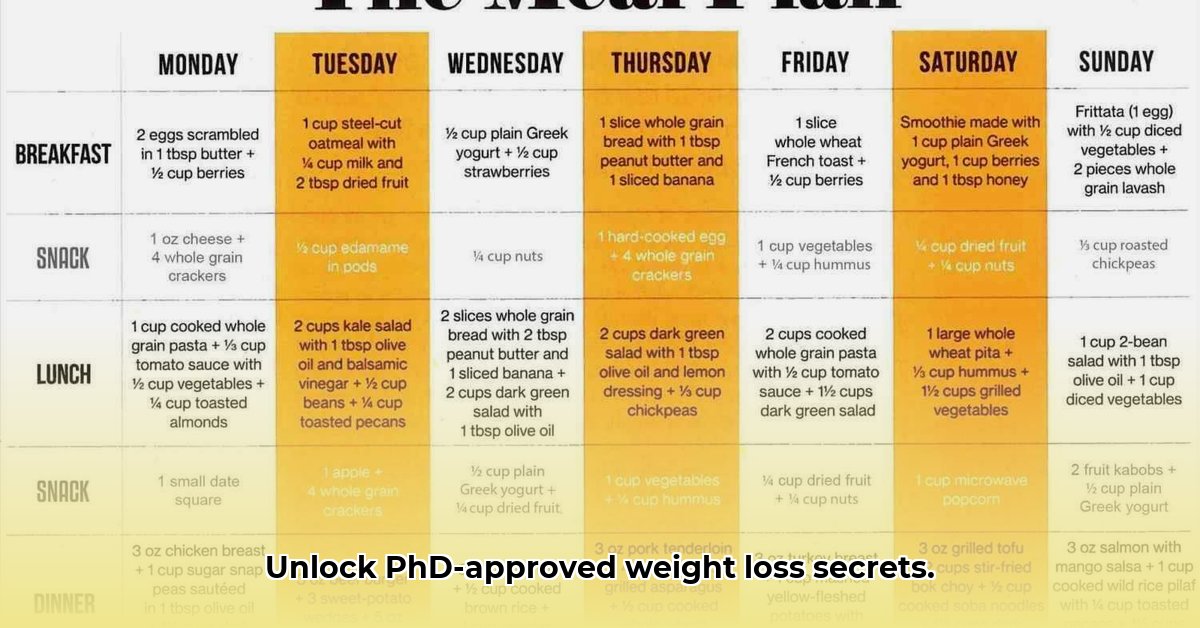
This sample meal plan showcases PhD weight loss-friendly foods. Adapt it to your preferences and dietary needs.
- Breakfast: Oatmeal with mixed berries and walnuts (fiber, sustained energy).
- Lunch: Large salad with leafy greens, grilled chicken/salmon, and colorful vegetables (lean protein, healthy fats, vitamins).
- Dinner: Baked salmon with roasted sweet potatoes and broccoli (omega-3s, complex carbs, vitamins).
- Snacks: Greek yogurt with honey, fruit, or a small handful of almonds (protein, healthy fats, fiber).
Essential Food Groups: Your Weight Loss All-Stars
These food groups are cornerstones of your weight loss plan:
| Food Group | Examples | Benefits |
|---|---|---|
| Lean Protein | Chicken, fish, beans, lentils, tofu | Builds muscle, promotes satiety, supports hormone health. |
| Healthy Fats | Avocados, nuts, olive oil, fatty fish | Essential for brain function, hormone production, satiety. |
| Complex Carbohydrates | Whole grains, sweet potatoes, fruits | Sustained energy, fiber, blood sugar regulation. |
| Fiber-Rich Foods | Fruits, vegetables, whole grains | Digestive health, satiety, blood sugar regulation. |
Foods to Minimize or Avoid: Potential Roadblocks
Limiting these foods is crucial for optimal results:
- Processed Foods: Often high in unhealthy fats, sodium, and added sugars; minimal nutritional value.
- Sugary Drinks: Empty calories, blood sugar spikes, increased cravings.
- Refined Carbohydrates: White bread, pasta, pastries; low fiber, nutrient-poor.
Practical Strategies for Success: Making it a Lifestyle
1. Meal Planning & Prepping: Plan meals weekly, prepare components in advance to avoid unhealthy impulse choices.
2. Smart Grocery Shopping: Create a weekly shopping list based on your meal plan. Shop the perimeter of the store for fresh produce and whole grains.
3. Dining Out Strategies: Choose restaurants with healthy options, opt for grilled/baked dishes, lean protein, and vegetables.
Your PhD Weight Loss Journey: A Sustainable Approach
Sustainable weight management is a journey, not a race. Small, consistent changes are more effective than drastic measures. By focusing on nutrient-rich foods and adopting these strategies, you'll achieve your weight goals and enhance your well-being. Are you ready to start feeling your best? Remember to consult with a healthcare professional or registered dietitian for personalized guidance.